Cocoon Nest / Growing Nest
Link|https://www.hakuten.co.jp/works/tokyo-tatemono_kyobashi-nest
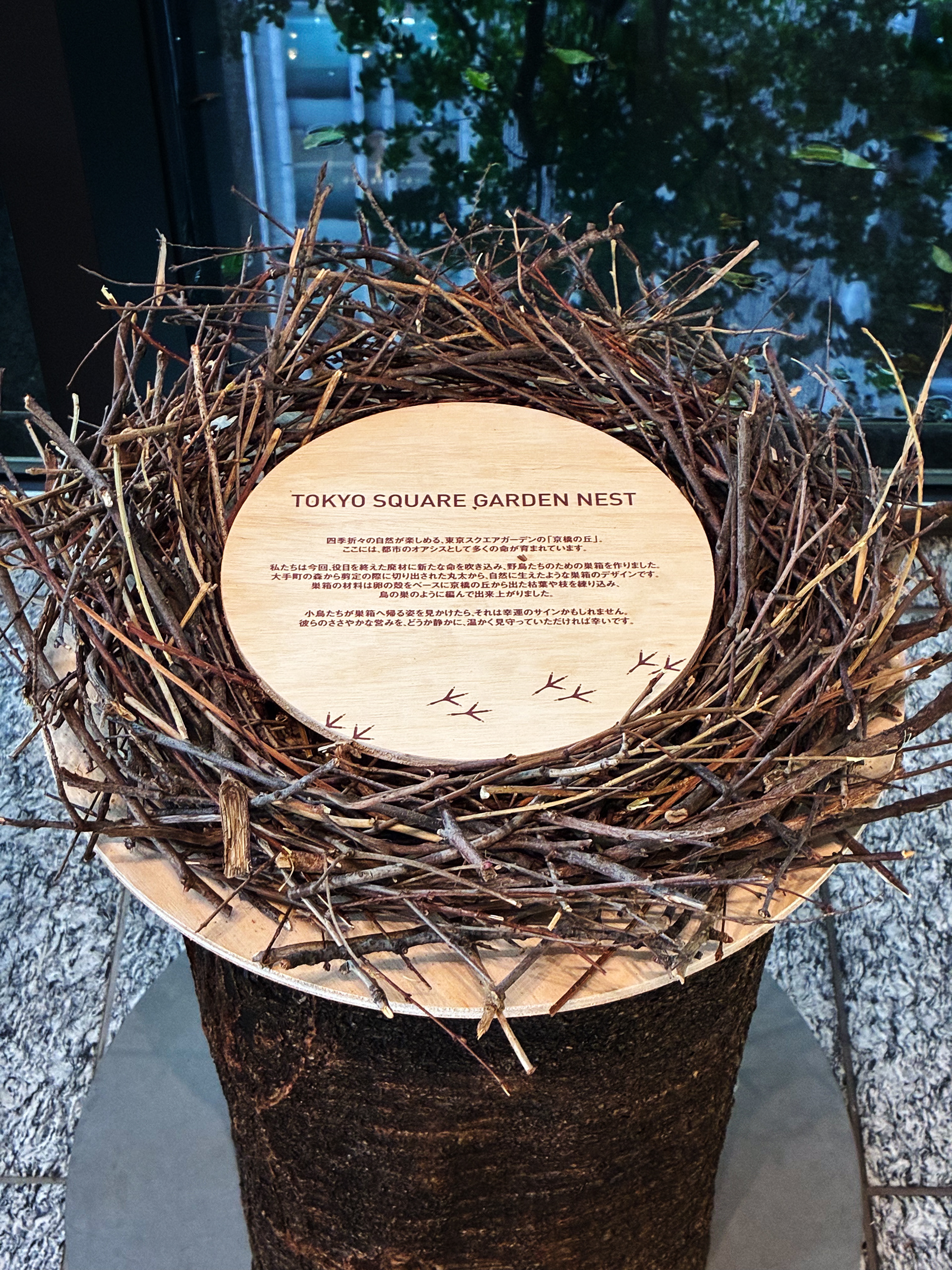
Tokyo Square Garden, a large-scale mixed-use complex directly connected to Tokyo Metro’s Kyobashi Station, features a vast vertical green space called “Kyobashi no Oka” and has received numerous environmental awards, including ABINC certification. This project, conducted in collaboration with Tokyo Tatemono—which owns and manages the complex—is an initiative to recycle waste materials generated at sites such as “Kyobashi no Oka” that would otherwise be discarded, thereby creating new value and promoting a circular economy. By visualizing the birds’ nesting process, the project aims to foster an awareness of coexistence with nature among urban residents and encourage behavioral changes toward a regenerative society.
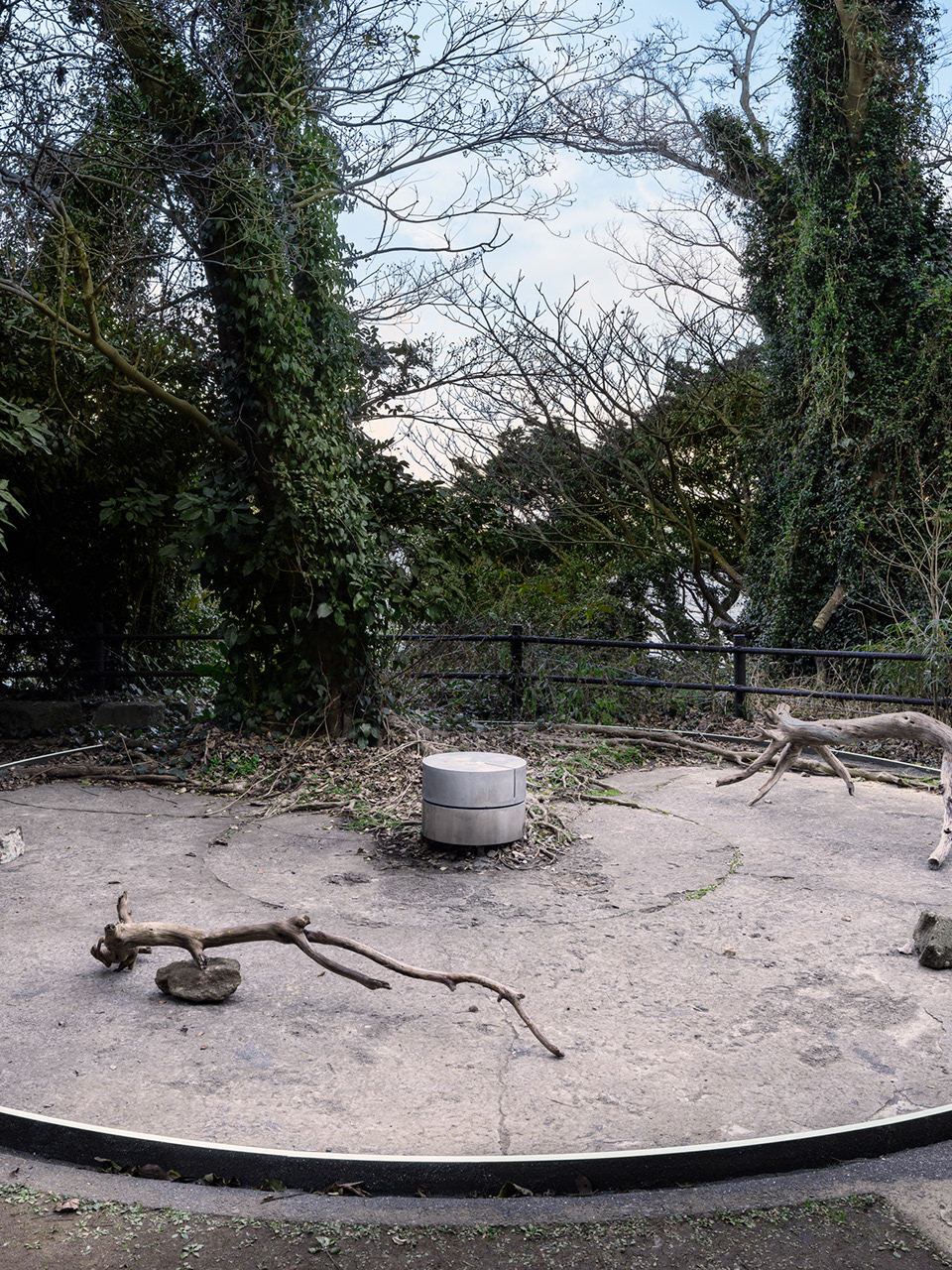
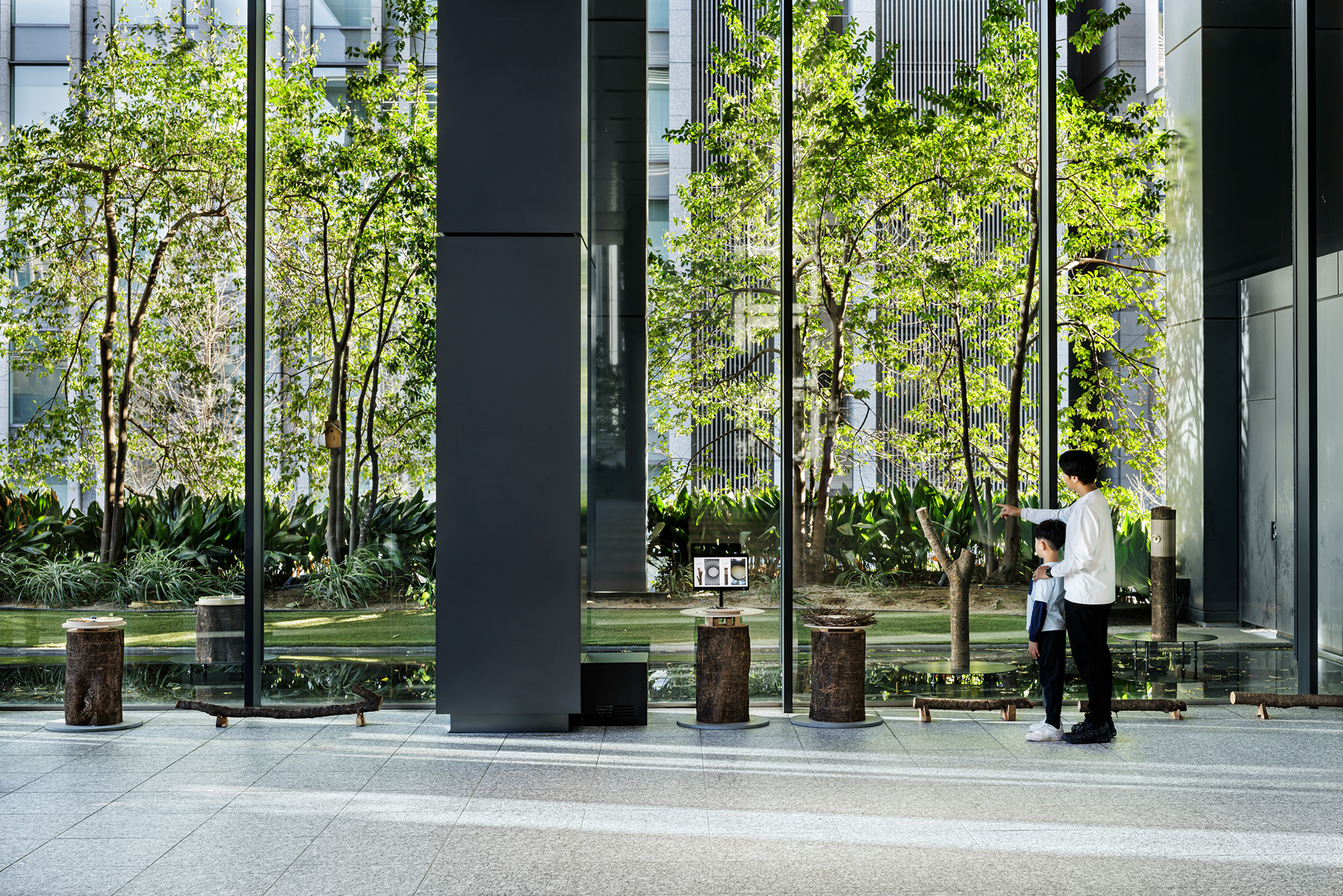
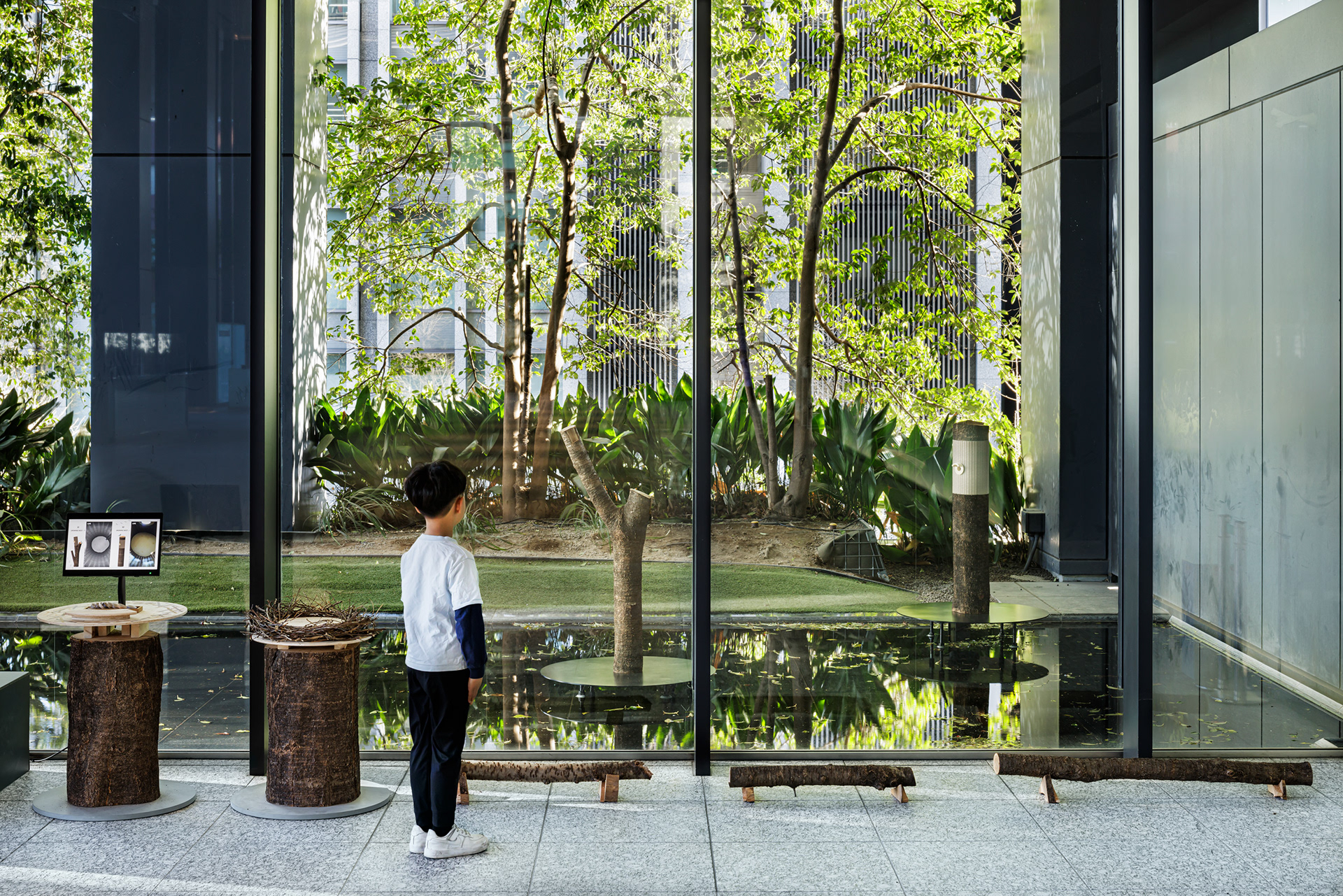
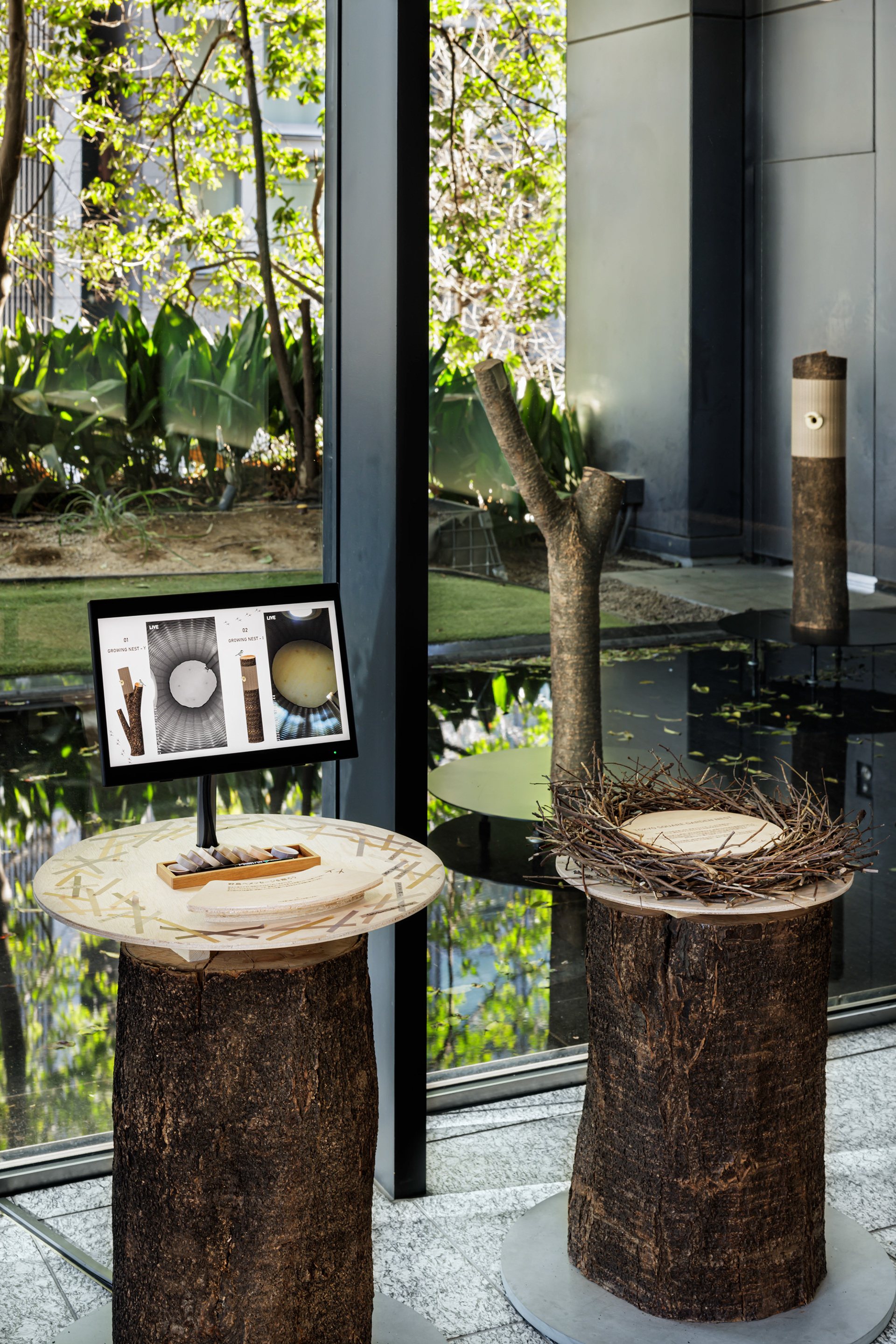
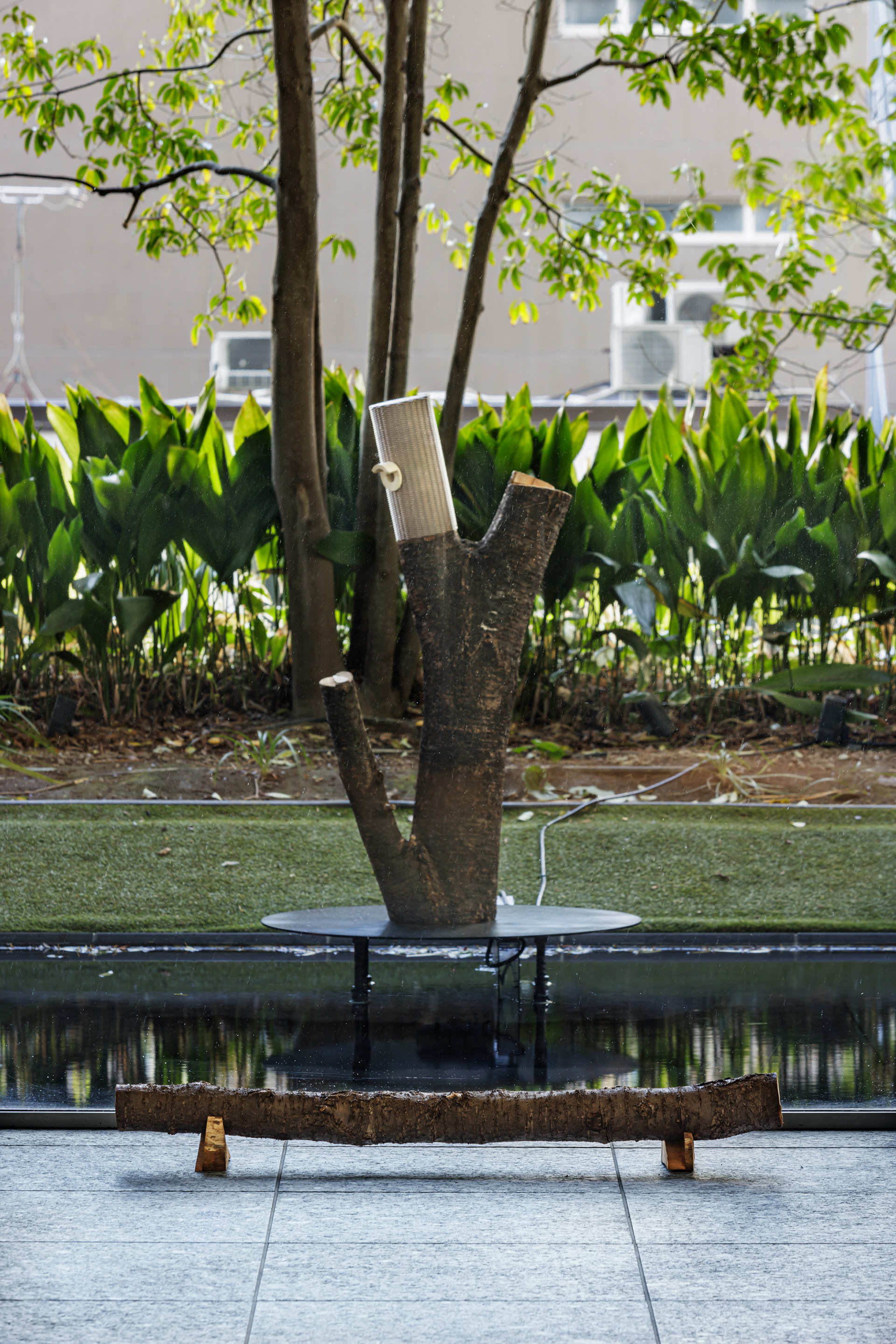
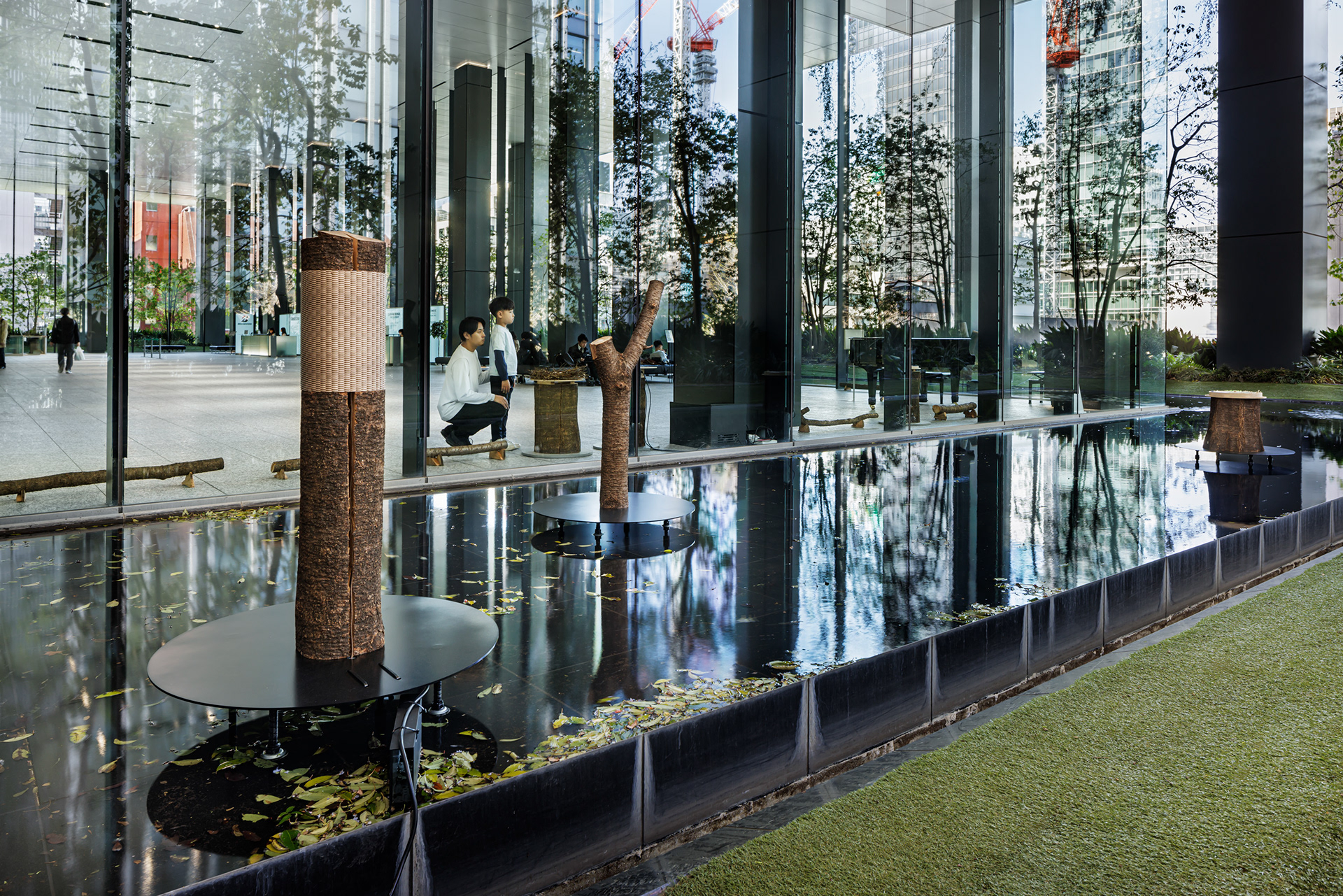
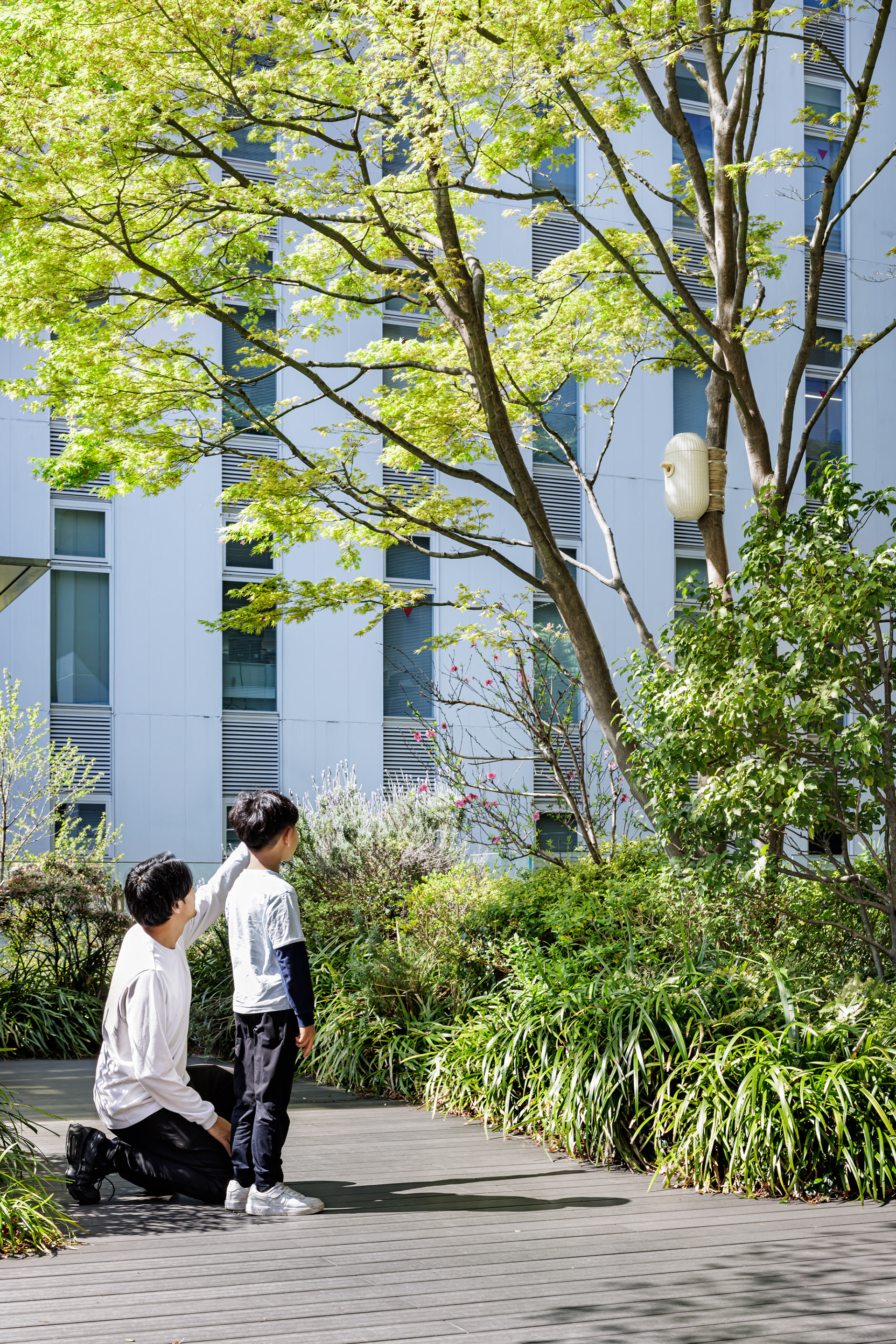
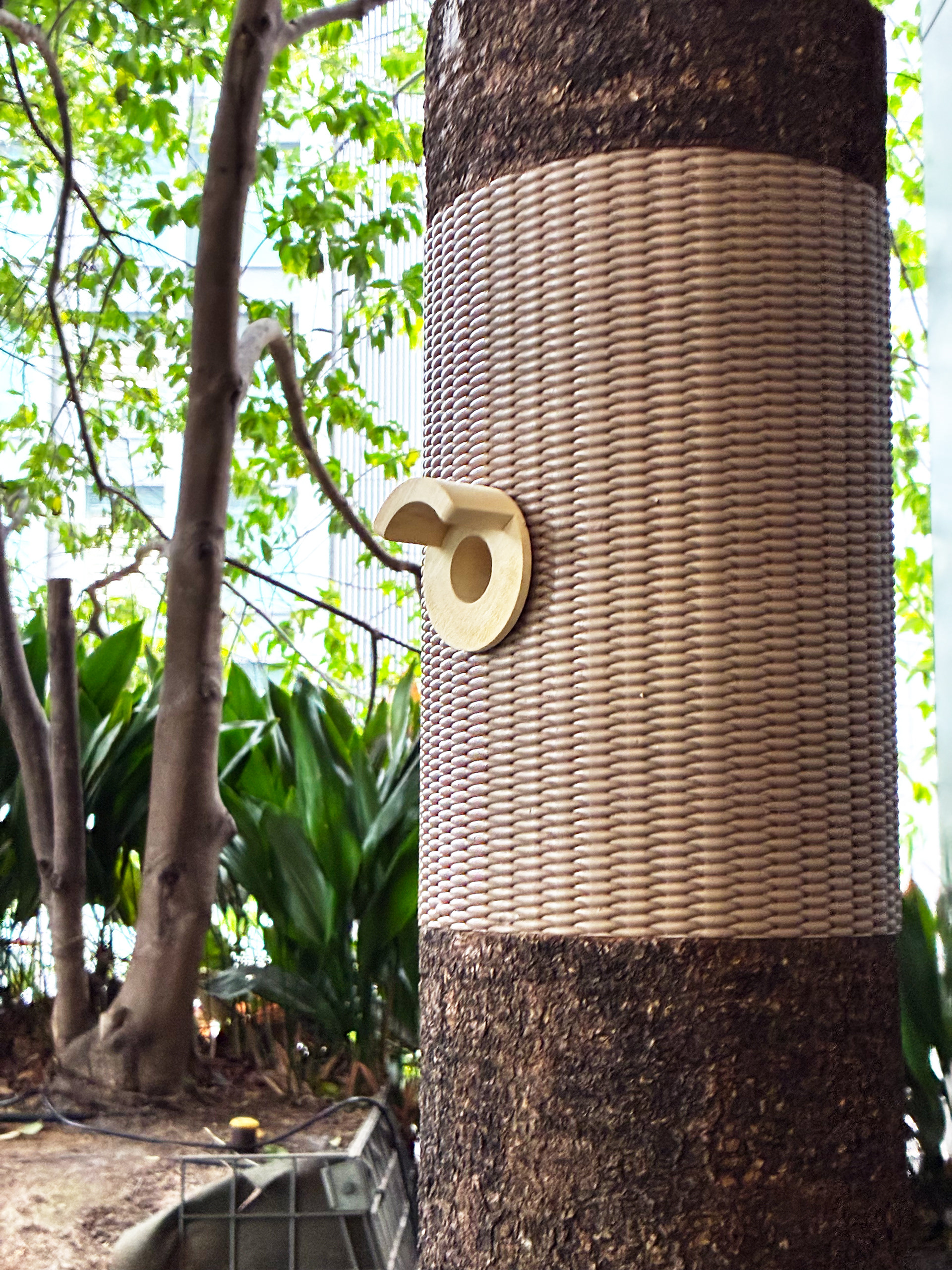
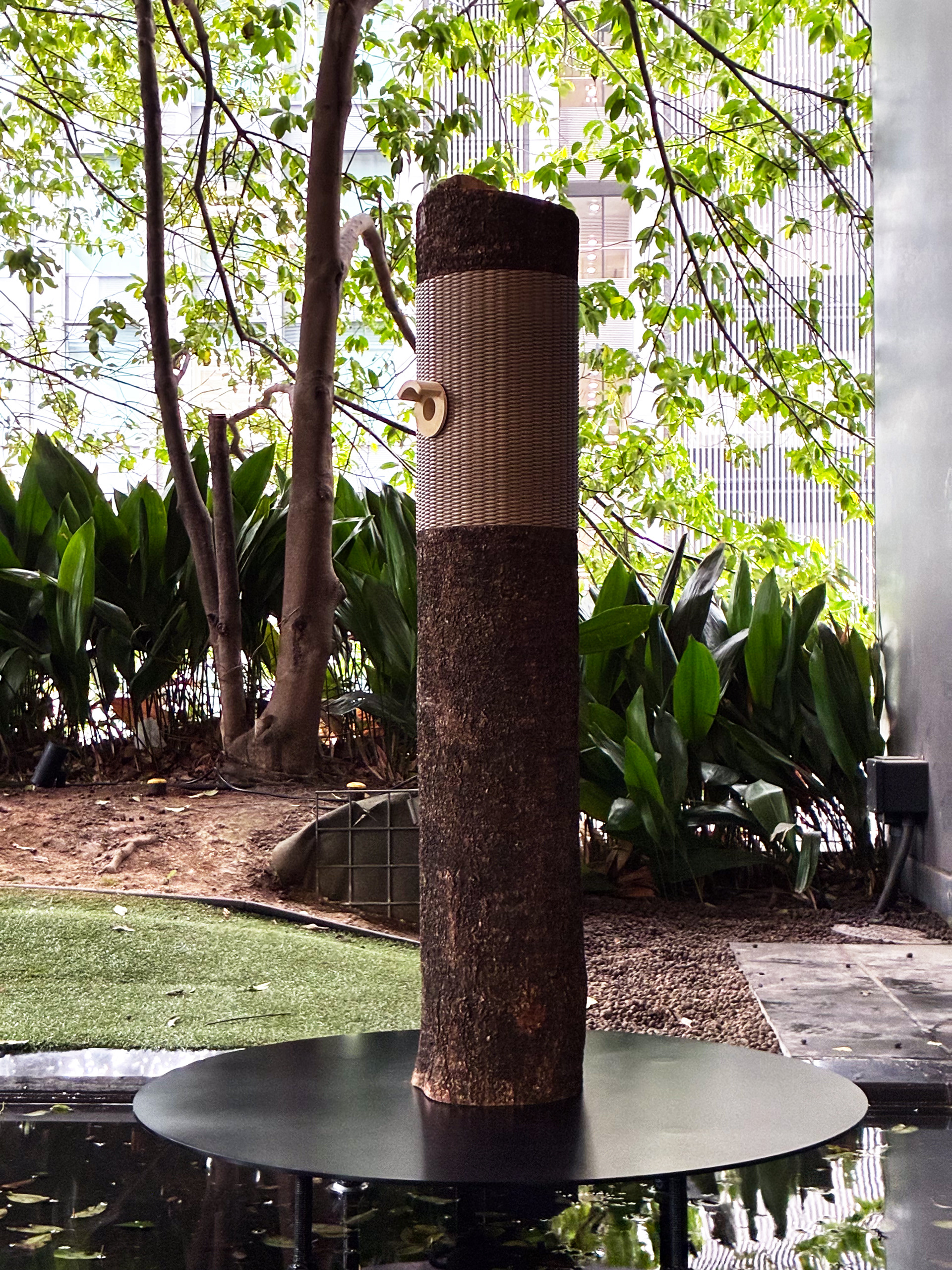
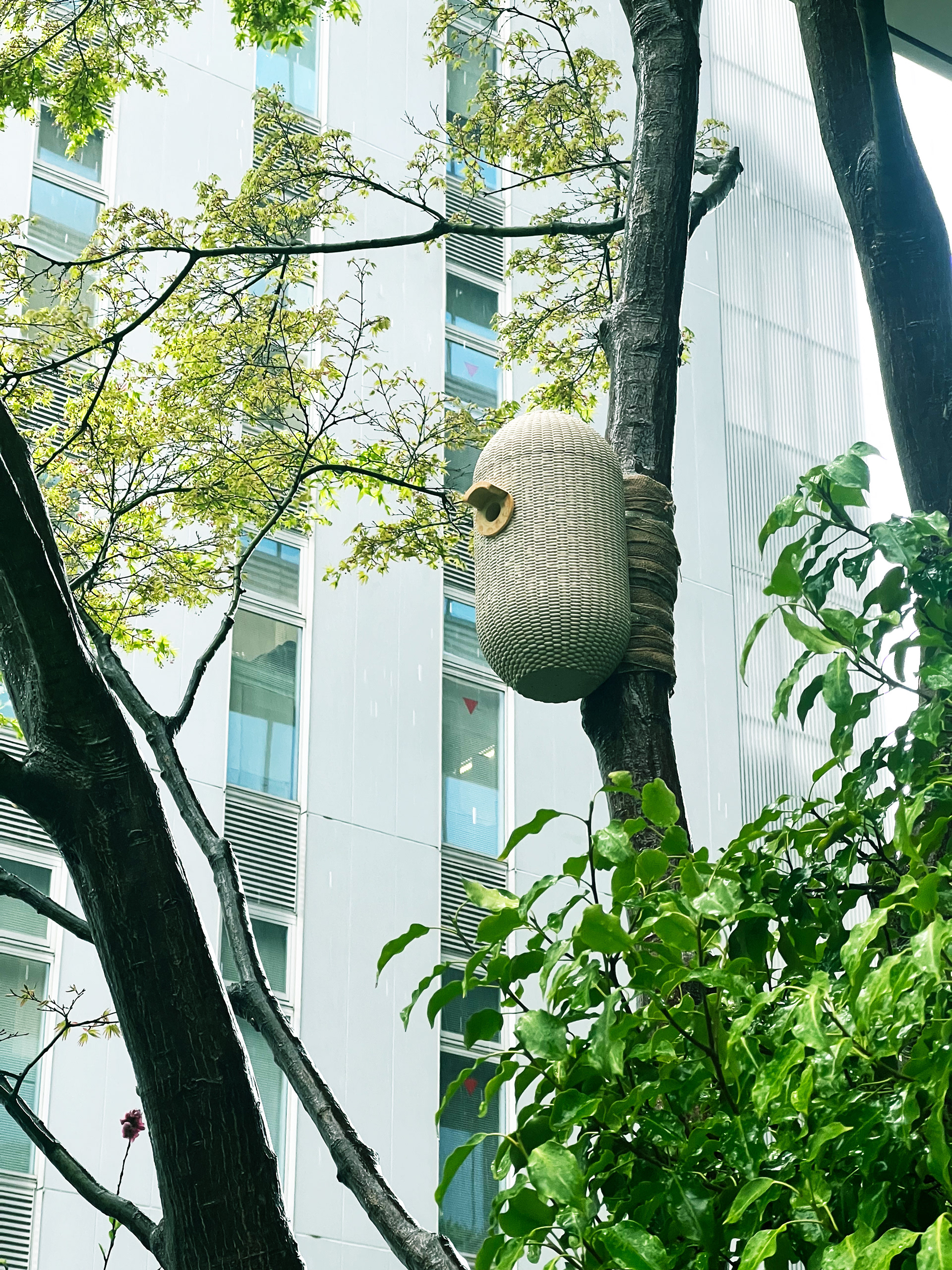
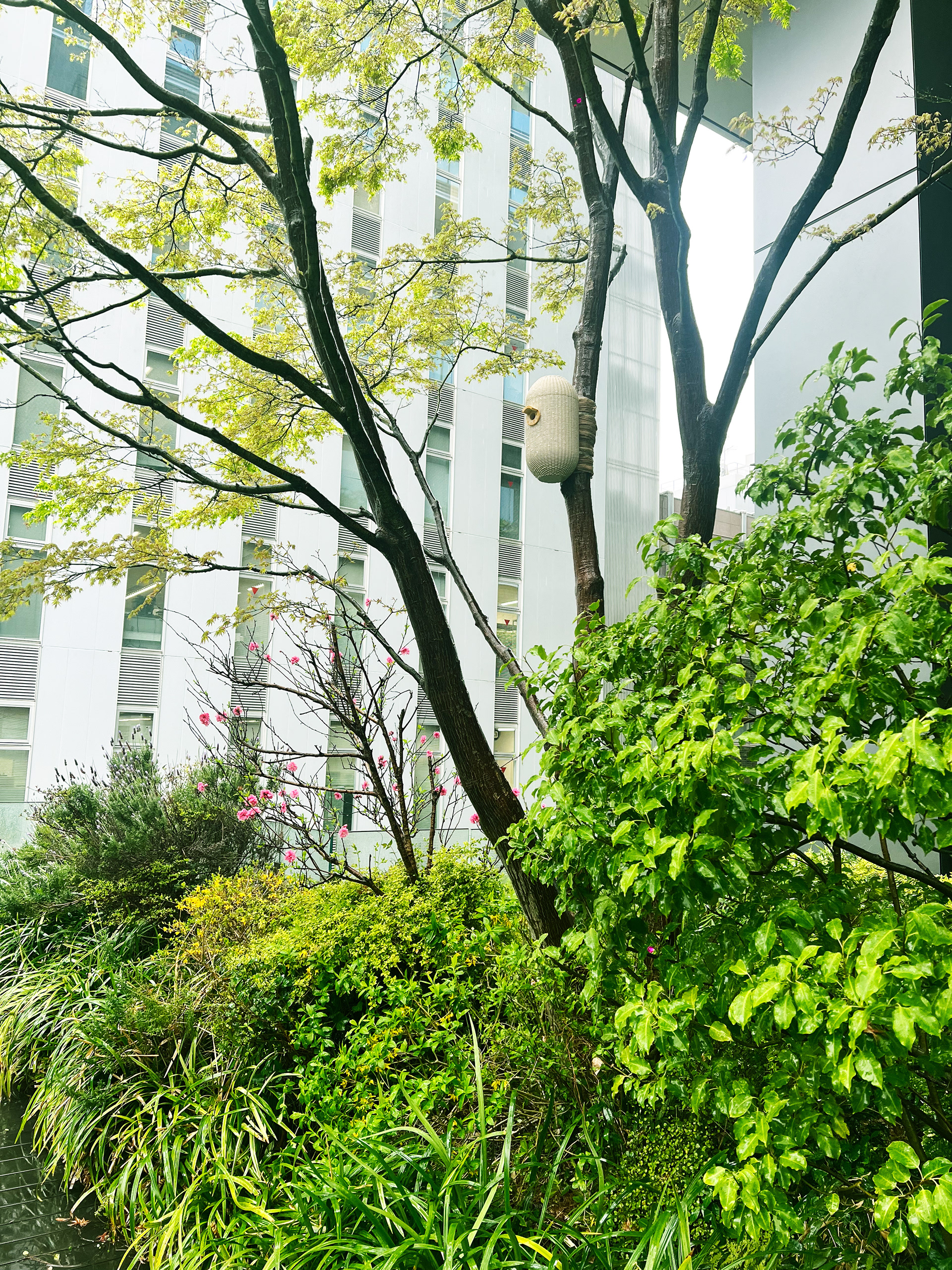
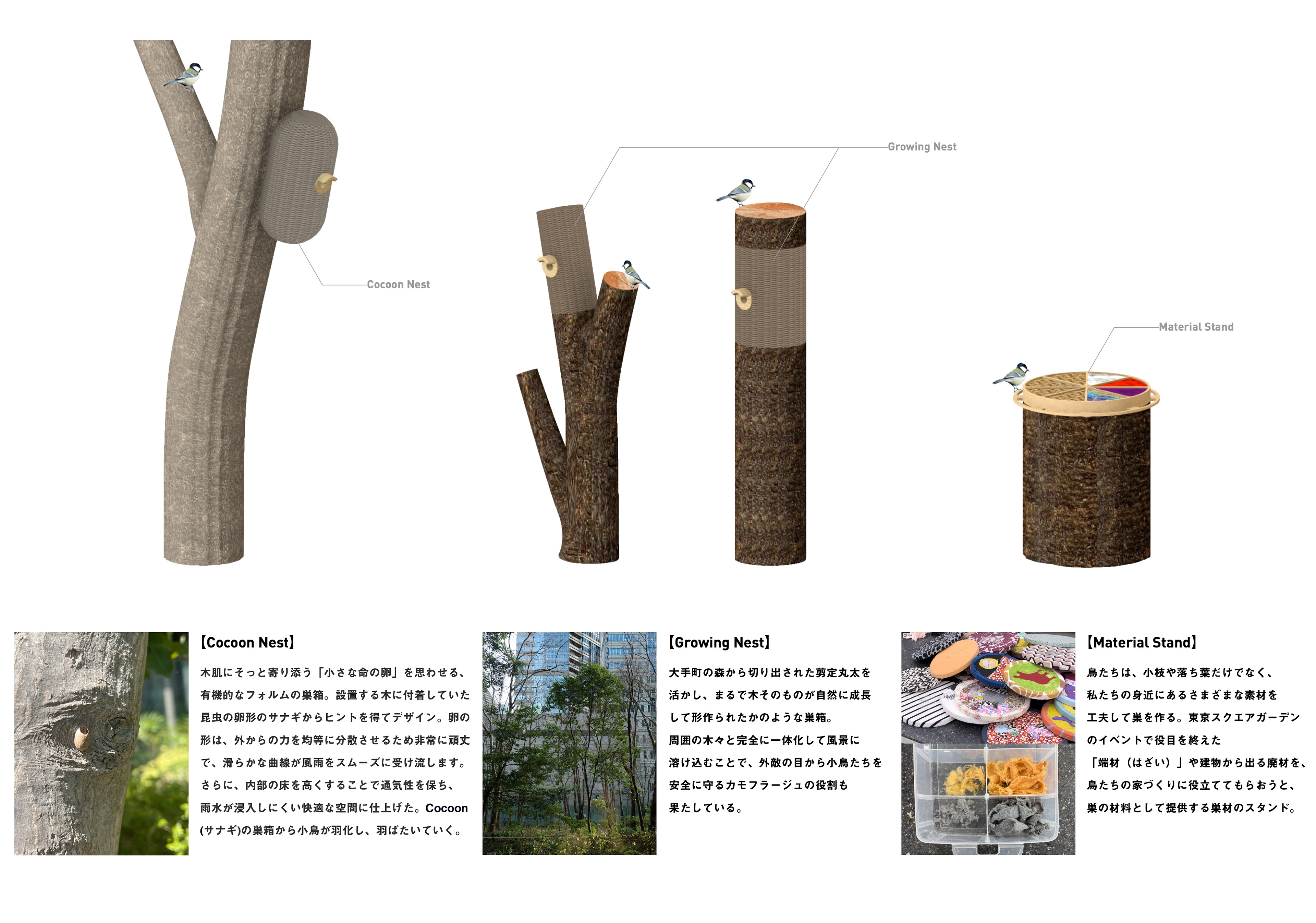
Following on-site surveys conducted with the Japan Bird Protection Federation, we focused on birds’ adaptability and instinctive material selection to design nest boxes utilizing waste materials from the building. The shapes were derived from forms found in nature, and two designs were developed using digital fabrication technology. The first is the “Cocoon Nest,” an organic form inspired by insect pupae found in wood, featuring a sturdy structure that repels wind and rain, along with high breathability and water resistance. The second is the “Growing Nest,” which utilizes pruning logs from the “Otemachi Forest” and features an artificial hollow that allows it to blend in with the surrounding trees to protect itself from predators.
These were created by mixing eggshell-based pellets with pruning branches, dead leaves, event fabrics, and construction offcuts from the building, then molding them using a 3D printer. The diversity of materials lends each nest its own unique character, achieving a balance between a texture that symbolizes the circular economy of urban resources and high functionality that allows wild birds to live in safety.
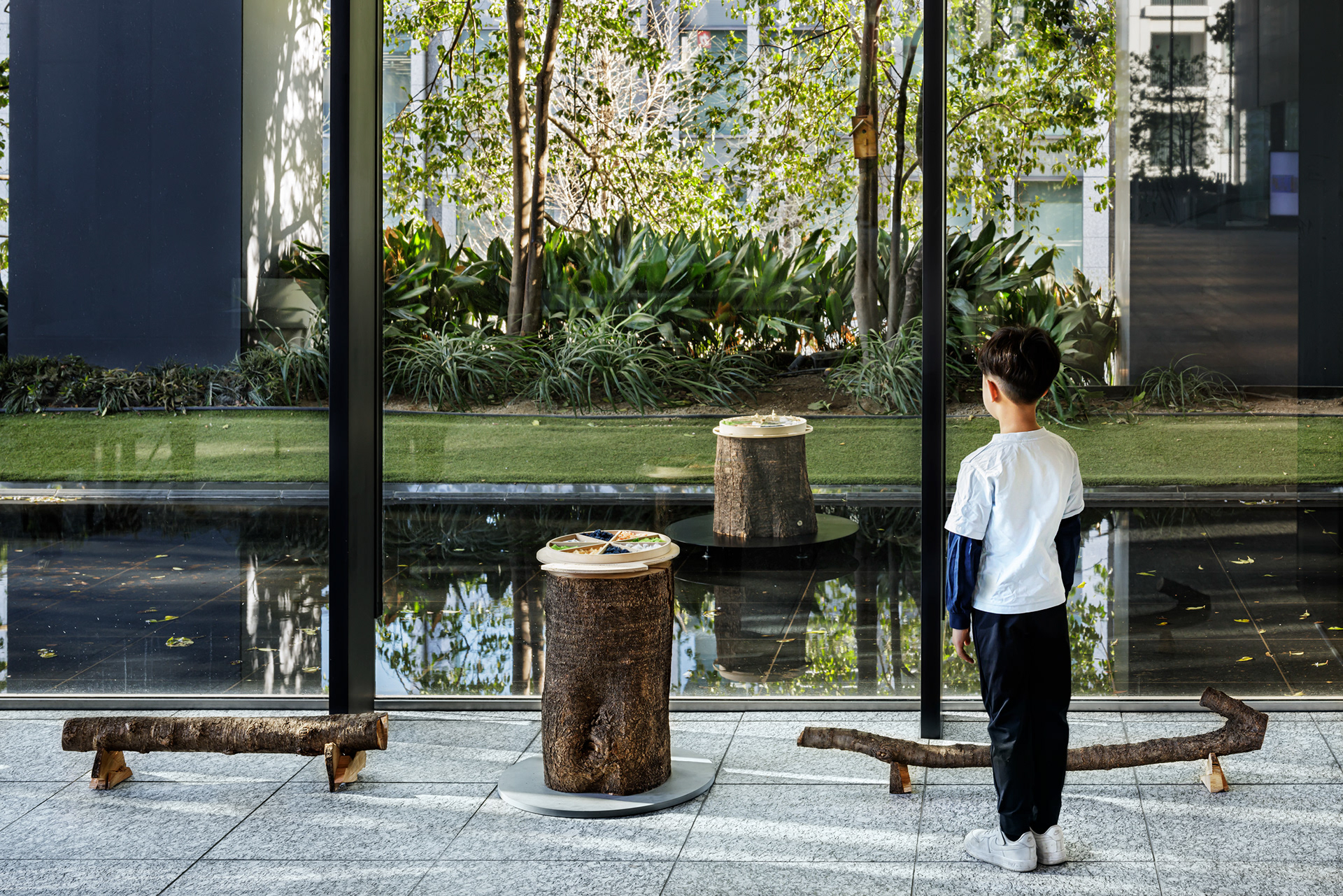
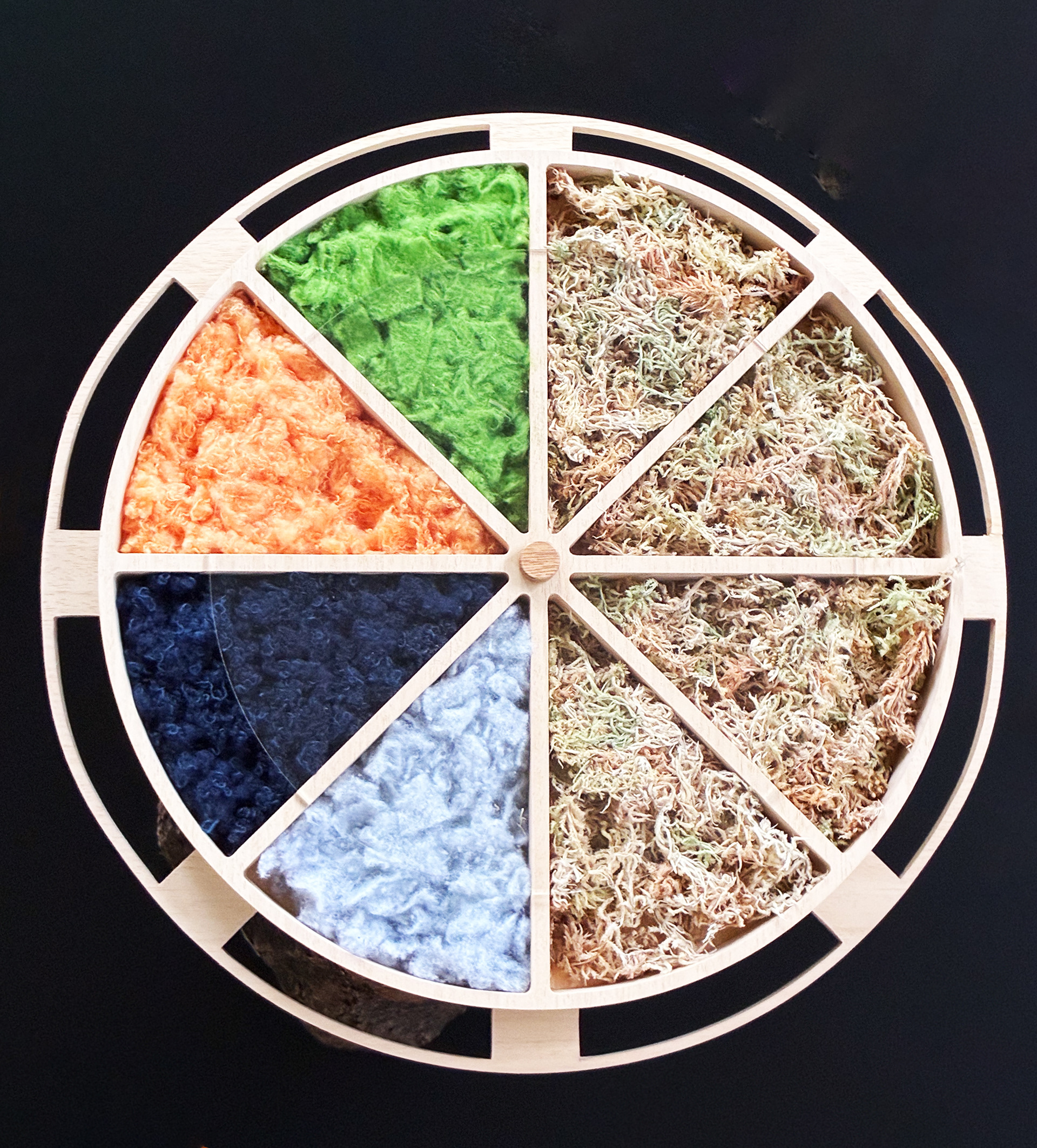
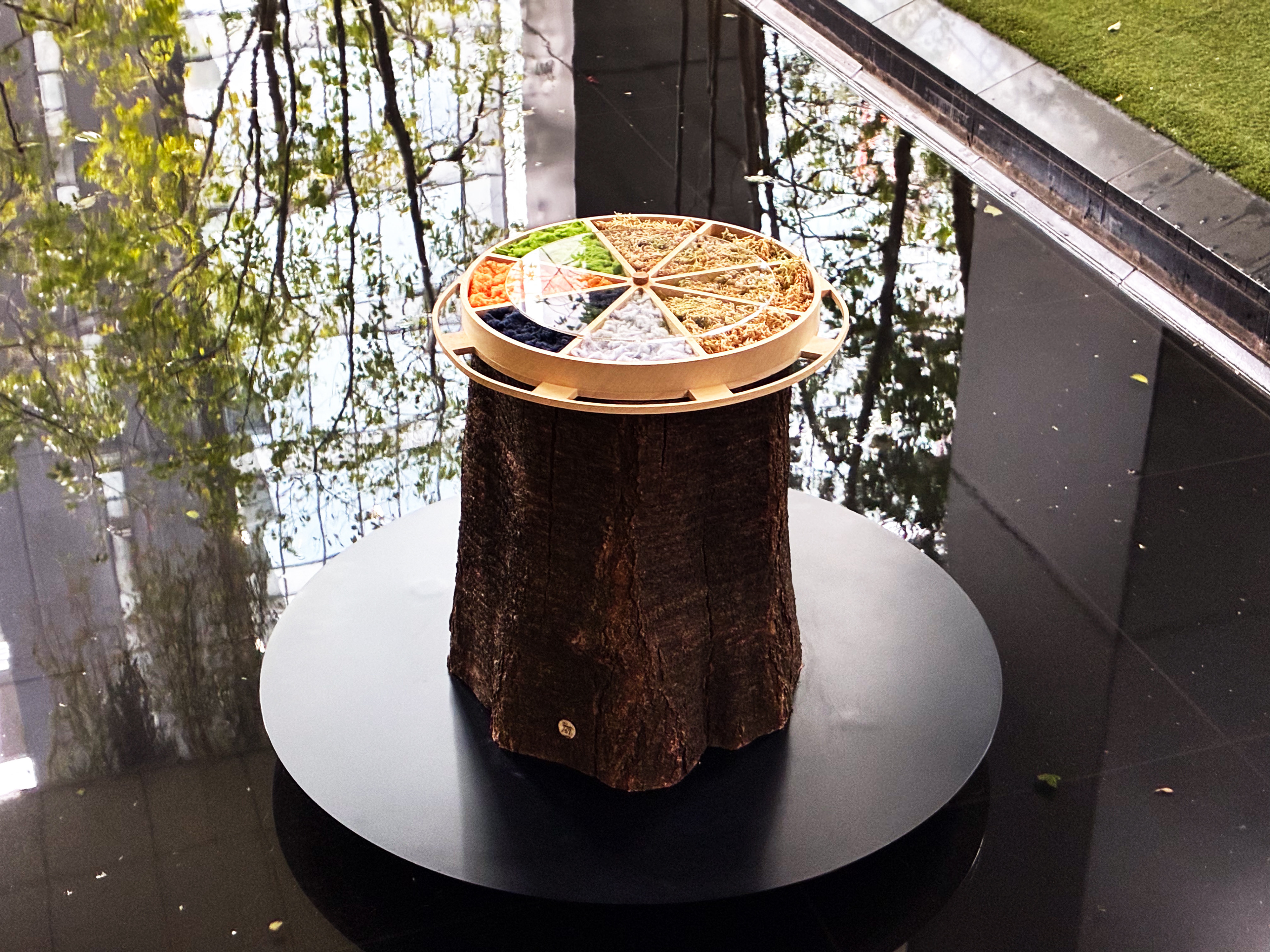
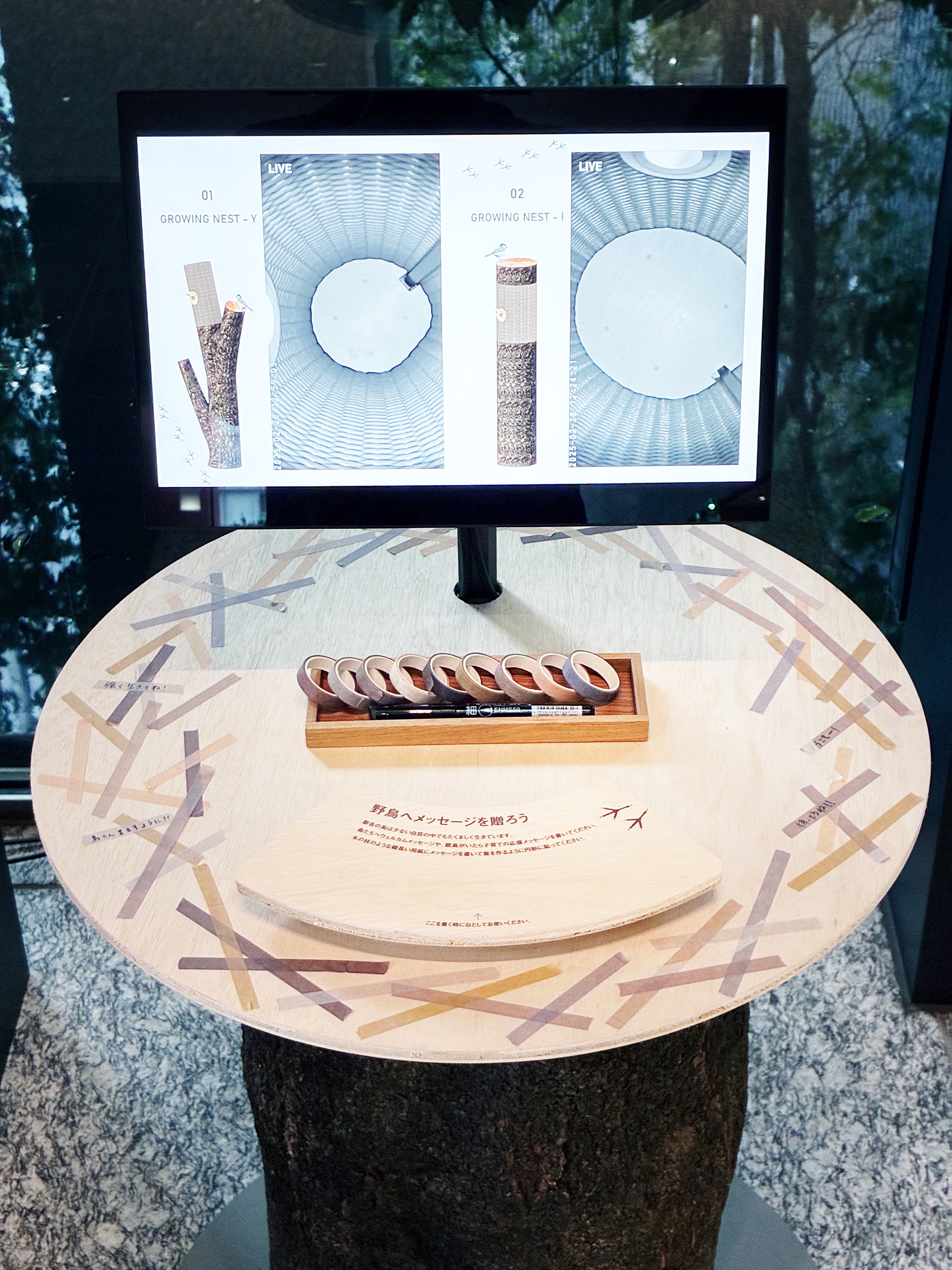
Furthermore, to deepen urban residents’ understanding of ecosystems and circular resources, two features were incorporated. The first is a small live camera inside the nest box. It streams the nest-building process in real time to a monitor at the office entrance, visualizing the workings of nature like a “show window.” The second is the installation of a “nesting material donation stand” that collects leftover materials from events and building construction. This system allows the birds themselves to choose between natural and urban materials, creating a rich ecological process where items discarded by humans become part of the wild birds’ “homes,” and providing a profound learning experience.
東京メトロ「京橋」駅直結の大規模複合ビル「東京スクエアガーデン」は、広大な立体緑化空間「京橋の丘」を擁し、ABINC認証など数多くの環境表彰を受けている。本プロジェクトは、保有・管理する東京建物とともに、この「京橋の丘」などで発生する本来廃棄されるはずの廃材を再生利用し、新たな価値を与えて循環させる試みである。鳥たちの営巣プロセスを可視化することで、都市生活者に自然との共生意識を育み、リジェネラティブ(再生可能)な社会への行動変容を促すことを目指した。
日本鳥類保護連盟との現地調査を経て、鳥の適応力や本能的な素材選びに着目し、同ビルから出る廃材を駆使した巣箱を計画した。形状は自然界の形状から導き出し、デジタル製造技術を駆使して2つのデザインを開発した。1つ目は、木で見つかった虫のさなぎをヒントに、頑丈で風雨を受け流し、高い通気性・防水性を備えた有機的フォルムの「Cocoon Nest(コクーン・ネスト)」。2つ目は、「大手町の森」の剪定丸太を生かし、周囲の木々と一体化して外敵から身を守る、人工的なうろを持った「Growing Nest(グローイング・ネスト)」である。
これらは、卵の殻ベースのペレットに、同ビルから出た剪定枝、枯葉、イベント用布地、建材端材などを混ぜ合わせ、3Dプリンターで成形した。素材の多様性がそのまま個性となり、都市内の資源循環を象徴する質感と、野鳥が安心して過ごせる高い機能性を両立している。
さらに、都市の人々が生態系や循環型資源への理解を深めるため、2つの仕掛けを施した。1つ目は、巣箱内部の小型ライブカメラである。巣作りのプロセスをオフィスのエントランスモニターにリアルタイム配信し、自然の営みを“ショーウィンドウ”のように可視化した。2つ目は、イベント端材やビル廃材を集めた「巣材提供スタンド」の設置である。自然由来と都市由来の素材から鳥自身に選択してもらう仕組みであり、人間にとっての不要物が野鳥の「家」の一部となる、豊かな生態系の構築プロセスと深い学びの場を創出している。
Planning / Design | Takumi Takahashi
Creative Engineering | Ami Takahashi
Produce | Keiko Nishimura、Jingyan Li、Yukiyoshi Misawa
Product Management | Kanau Minami、Kounosuke Okumura